
Coordinated Readiness Supports Better Recovery Outcomes
Recovery & Outcomes Summary
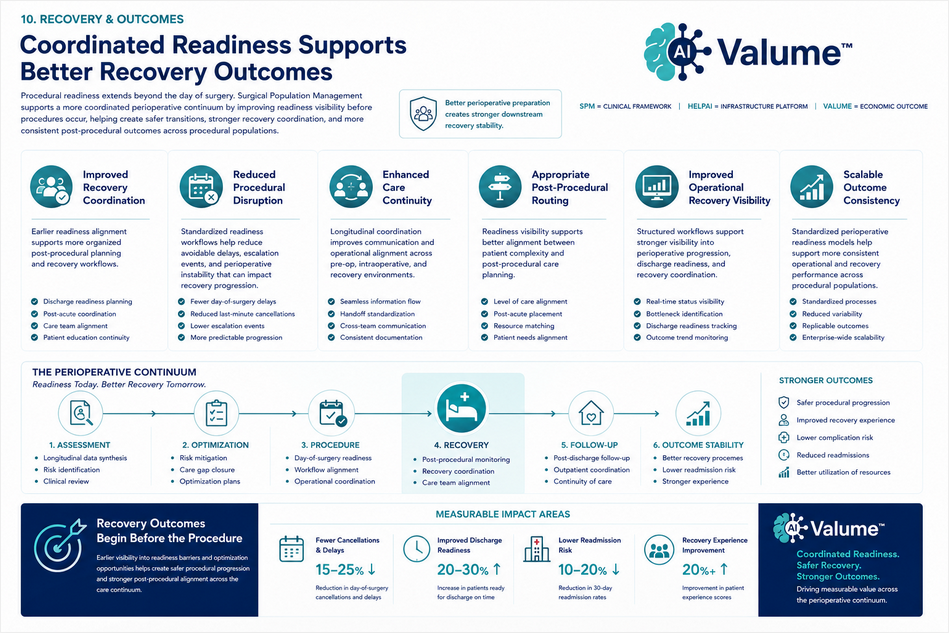
Procedural readiness extends beyond the day of surgery and directly influences downstream recovery coordination, operational continuity, and post-procedural outcomes. Surgical Population Management supports a more coordinated perioperative continuum by improving readiness visibility earlier in the patient journey through longitudinal synthesis, standardized assessments, and physician validated oversight.
By identifying readiness barriers proactively and supporting more aligned perioperative workflows, healthcare organizations can reduce procedural disruption, strengthen recovery coordination, improve continuity across care environments, and support safer post-procedural progression. Earlier operational and clinical alignment also helps improve discharge planning, resource coordination, and post-procedural routing across procedural populations.
Recovery and outcome stability are strengthened when procedural readiness is approached as a longitudinal infrastructure model rather than a last-minute clearance process. Through coordinated readiness workflows and structured perioperative oversight, Surgical Population Management supports more consistent recovery experiences, stronger operational performance, and improved procedural outcomes at scale.