
Operational Stability Through Standardized Readiness
Procedural readiness has direct implications for operational stability, throughput consistency, and resource utilization across the perioperative environment. Surgical Population Management supports a more coordinated operational model by shifting readiness assessment and risk visibility upstream before the day of surgery.
Through longitudinal clinical synthesis, standardized readiness workflows, and physician validated coordination, healthcare organizations can reduce operational variability, improve scheduling predictability, decrease preventable day-of-surgery disruption, and strengthen procedural throughput stability across procedural populations.
By supporting earlier identification of readiness barriers, reducing redundant workflows, and improving site-of-service alignment, HelpAI helps create a more stable perioperative infrastructure designed to support operational consistency, safer procedural readiness, and improved enterprise performance at scale.
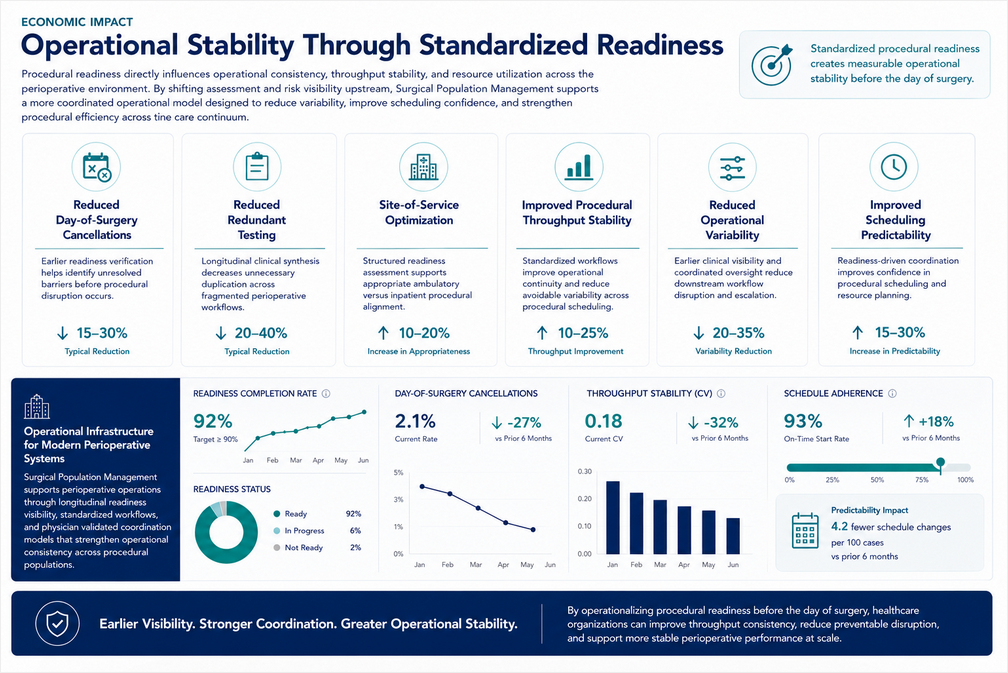
Procedural readiness directly influences operational consistency, throughput stability, and resource utilization across the perioperative environment. By shifting assessment and risk visibility upstream, Surgical Population Management supports a more coordinated operational model designed to reduce variability, improve scheduling confidence, and strengthen procedural efficiency across the care continuum.
Standardized procedural readiness creates measurable operational stability before the day of surgery.
Reduced Day-of-Surgery Cancellations
Earlier readiness verification helps identify unresolved barriers before procedural disruption occurs.
Reduced Redundant Testing
Longitudinal clinical synthesis decreases unnecessary duplication across fragmented perioperative workflows.
Site-of-Service Optimization
Structured readiness assessment supports appropriate ambulatory versus inpatient procedural alignment.
Improved Procedural Throughput Stability
Standardized workflows improve operational continuity and reduce avoidable variability across procedural scheduling.
Reduced Operational Variability
Earlier clinical visibility and coordinated oversight reduce downstream workflow disruption and escalation.
Improved Scheduling Predictability
Readiness-driven coordination improves confidence in procedural scheduling and resource planning.